


Not all breast prostheses are the same. Explore silicone, foam, partial, and adhesive options with clinical guidelines that help post-mastectomy fitters deliver confident, comfortable, patient-centered care.
Selecting the right post-mastectomy prosthesis is a meaningful step in the recovery process after breast surgery. For post-mastectomy fitters, understanding the full range of breast prosthesis types—and applying sound clinical guidelines to each fitting—ensures patients receive care that supports comfort, function, and confidence.
Breast prostheses are not one-size-fits-all. Even though many are pre-manufactured, individual surgical outcomes, tissue integrity, lifestyle, and personal preference all influence selection.
As allied healthcare professionals, fitters are uniquely positioned to bridge clinical knowledge with compassionate, individualized care. This overview looks at the primary breast prosthesis types and highlights practical clinical considerations to support best outcomes.
Table of Contents
The Role of Clinical Guidelines in Prosthesis Selection
Clinical guidelines provide a structured framework for decision-making. While each patient’s needs are unique, consistent assessment helps ensure safe and appropriate product recommendations.
Before selecting a post-mastectomy prosthesis, conduct a thorough review of an individual’s:
- surgical history
- healing status
- radiation exposure
- allergies
- complications – healing, surgical
- lymphedema
- surgical edema
Observe:
- chest wall contours
- scar placement
- scar status
- skin condition
- range of motion.
Also assess:
- posture
- compensatory shoulder elevation
- trunk shift
These observations guide the selection of prosthesis type, weight, and design. But equally important is patient input.
Clinical expertise and patient preference work best when combined through shared decision-making.
Silicone Breast Prostheses: Standard for Long-Term Wear
Silicone breast prostheses are the most commonly selected option for long-term use. Designed to mimic the weight, movement, and drape of natural breast tissue, they provide realistic contour and symmetry under clothing.
From a clinical perspective, silicone prostheses are particularly beneficial for unilateral mastectomy patients who require weight balance to support posture. Restoring weight distribution can help reduce neck and shoulder strain and promote musculoskeletal alignment.
Silicone options are available in full-weight and lightweight versions. Full-weight prostheses offer the closest approximation to natural breast tissue, while lightweight models reduce pressure on the chest wall.
It should also be noted that, clinically, there is such a consideration as ‘too lightweight’ for a permanent silicone option.
Final breast prosthesis selection should follow fitting guidelines for:
- healing stages
- chest contouring
- patient tolerance
- lifestyle demands
When fitting silicone breast prostheses, ensure the bra (and pocket) provides adequate support to the prosthesis. Encourage patients to move naturally during the fitting to evaluate stability and comfort.
Non-Silicone Prostheses: Early Recovery Alternatives
Non-silicone breast prosthesis types, often made from foam or fiberfill materials, are commonly recommended during the immediate post-surgical period. These lightweight forms place minimal pressure on healing tissues and are especially helpful when incisions remain tender.
Clinical guidelines typically support introducing soft forms soon after surgery, once approved by the surgical team. They allow patients to regain symmetry in clothing without adding weight that may stress the surgical site.
Foam prostheses are also popular for daily activities, travel, or warm climates. While they do not replicate the weight or movement of silicone, they offer comfort and flexibility. For bilateral patients or those prioritizing lightness, especially due to comorbidities such as skin allergies or cardiac conditions, non-silicone options may serve as either temporary or ongoing solutions.
Fitters should educate patients about the functional differences. Clarifying that soft forms provide appearance support rather than structural balance helps set realistic expectations.
Partial Breast Prostheses & Shapers
For patients who have undergone lumpectomy or partial mastectomy, symmetry concerns may be more subtle. Partial breast prostheses, also called shapers or equalizers, are designed to fill volume deficits and smooth contour irregularities.
These prostheses come in various shapes and thicknesses to accommodate different surgical patterns. Clinical assessment should focus on identifying areas of volume loss, indentation, or asymmetry.
A well-fitted partial prosthesis restores balance. Weight distribution is less dramatically altered in partial surgeries or lumpectomies, but depending on breast size, even a small excision can have a considerable effect.
Partial prostheses and shapers are also used for individuals with developmental concerns or trauma. For non-mastectomy clients, encourage patients to bring or wear their preferred bras to the fitting. This allows for a more precise starting point, ensuring the selected shaper integrates seamlessly into their wardrobe.
Attached & Adhesive Breast Prostheses
Attached or adhesive silicone breast prostheses adhere directly to the chest wall, offering an alternative to pocketed bras. These options enhance freedom of movement and create a more natural drape.
Clinically, adhesive prostheses are appropriate when the skin is fully healed (about 1 year from surgery). Patients with radiation-related skin changes, fragile tissue, or sensitivity may not tolerate adhesives well.
Before recommending an adhesive prosthesis, assess skin integrity carefully. Provide clear instructions on skin preparation, cleaning, and safe removal. Monitoring for irritation during follow-up visits is essential. For suitable candidates, adhesive prostheses can provide a secure fit and expanded wardrobe choices. As always, patient education and gradual introduction improve success.
Custom Prostheses
Initially, a custom prosthesis was often used as a fitting option when there were no other pre-manufactured clinical products available. Individuals with multiple surgeries or a Halstead surgery are often candidates for a custom prosthesis. However, recently, the understanding of the benefits of true custom breast prostheses has gained acceptance.
Breasts are the only anatomical prosthesis that is not routinely restored with a custom option.
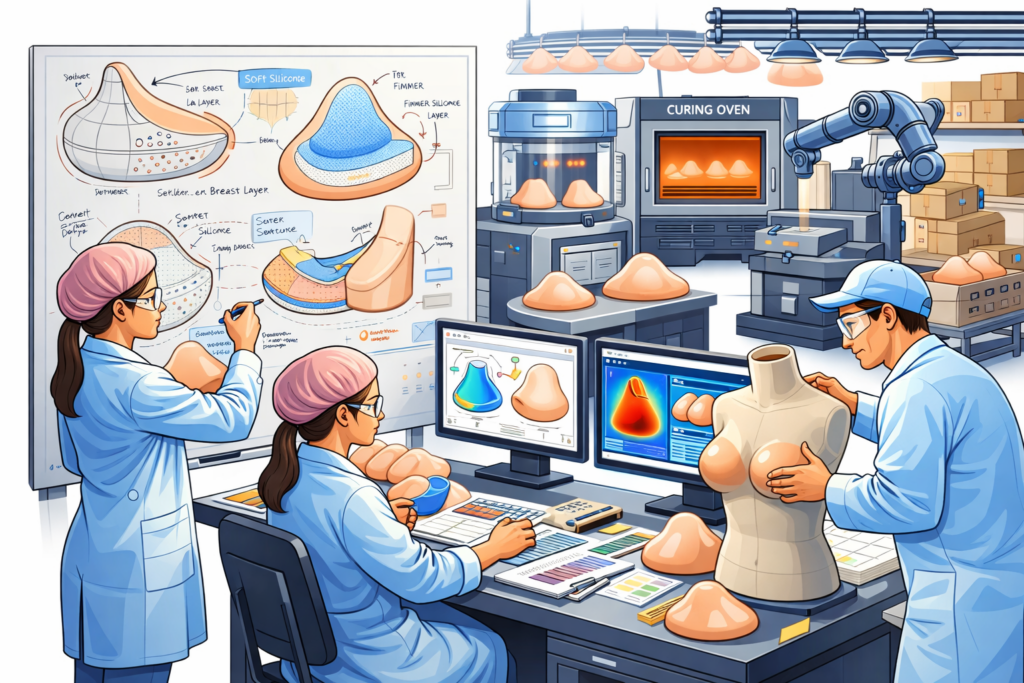
The made-to-measure silicone prostheses involve a stepwise manufacturing process. Measurements often involve a 3D scan, casting, or measurement software.
Custom skin colors, weight, and attachments are available. In addition to custom breast contouring, the areola and nipple complex is also customized.
Unique Clinical Needs
Some post-mastectomy prosthesis types are designed to address specific concerns. Silicone molded-back prostheses are designed with a secondary layer that molds to the chest wall.
Other designs include asymmetrical shapes for extensive tissue removal, prostheses with integrated cooling technology for hot flashes, beading to aid in edema drainage, or swim-specific designs resistant to water absorption.
Patients with lymphedema require special consideration. While a prosthesis does not treat lymphedema, improper fit may contribute to discomfort. Close collaboration with a lymphedema therapist can help guide product selection.
When encountering complex cases, consultation with manufacturers or experienced colleagues can provide additional insight. Staying current with product innovations supports evidence-informed recommendations.
Weight, Shape, and Projection Considerations
Beyond material type, clinical guidelines also address weight, shape, and projection. Selecting the correct projection ensures proportional balance with the contralateral breast in unilateral fittings. In bilateral fittings, projection choice is guided more by patient preference and body frame.
Weight selection should consider musculoskeletal health and tolerance. For some patients, a gradual transition from lightweight to full-weight silicone improves comfort and adaptation.
Always evaluate how the prosthesis interacts with the selected bra. Even the most appropriate breast prosthesis type may perform poorly without adequate garment support.
Education and Shared Decision-Making
Understanding breast prosthesis types is only part of the process. Explaining options clearly empowers patients to participate confidently in decisions about their care.
Use plain language to describe differences between silicone, foam, partial, and adhesive options. Demonstrate handling and placement techniques. Encourage patients to ask questions and voice concerns.
Reinforce that needs may change over time. Weight fluctuations, additional surgeries, and lifestyle changes can all influence prosthesis selection. Routine follow-up ensures continued satisfaction and optimal function.
Elevating Care Through Knowledge and Compassion
Breast prosthesis selection is both a clinical decision and a deeply personal one. By applying clear clinical guidelines and maintaining a warm, professional approach, post-mastectomy fitters provide care that supports physical recovery and emotional well-being.
As allied healthcare professionals, post-mastectomy fitters make a lasting difference. Through careful assessment, patient education, and individualized recommendations, they help restore balance, enhance comfort, and support renewed confidence after breast surgery. A strong understanding of breast prosthesis types allows fitters to tailor solutions thoughtfully and responsibly. When expertise is paired with empathy, the fitting experience becomes a positive step forward in the healing journey.