


Behind the compassion and care, many post-mastectomy fitters are quietly facing burnout. Explore the emotional realities of boutique work and sustainable self-care strategies that help professionals thrive long-term.
Table of Contents
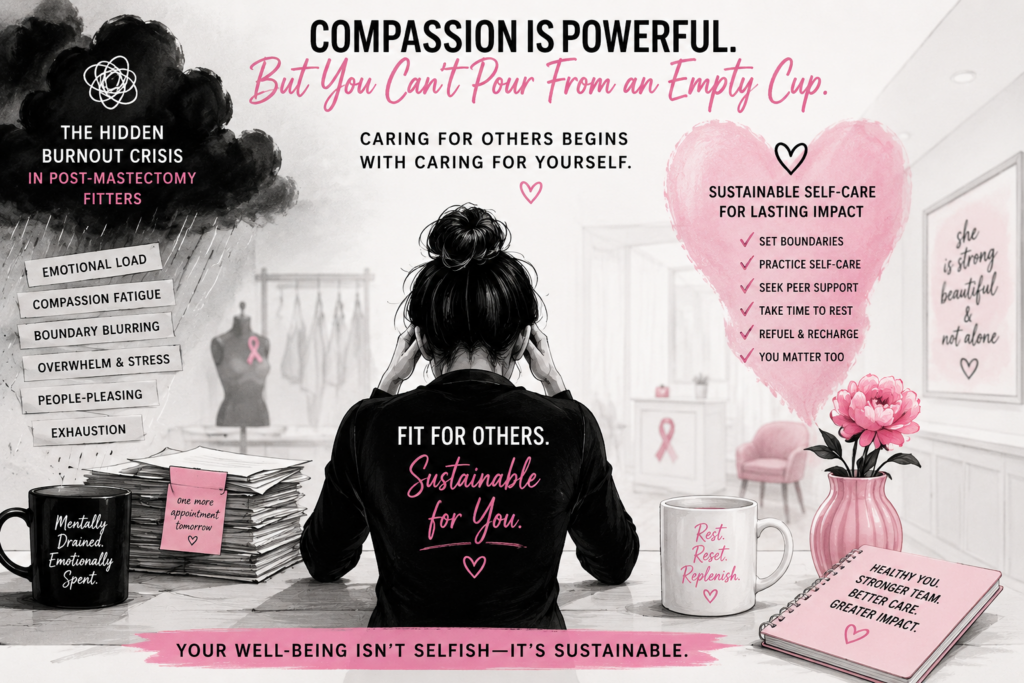
The Hidden Burnout Crisis Among Post-Mastectomy Fitters
In the post-mastectomy boutique world, compassion is often treated as an unlimited resource. Fitters are expected to be empathetic, emotionally available, technically precise, patient-centered, and endlessly reassuring—sometimes all before lunch. While the profession is deeply meaningful, it also carries an emotional intensity that many outside the industry fail to recognize.
Behind the polished fitting rooms, warm smiles, and personalized care experiences, a growing number of post-mastectomy fitters are quietly experiencing burnout, compassion fatigue, and emotional depletion. Yet the culture within many boutiques still encourages professionals to “push through,” minimizing the psychological demands of supporting women during some of the most vulnerable moments of their lives.
The reality is that burnout in boutique settings is not simply a staffing or scheduling issue. It is an occupational wellness issue that directly affects patient experience, employee retention, business sustainability, and long-term professional fulfillment.
And increasingly, the profession can no longer afford to ignore it.
Why This Profession Carries Unique Emotional Weight
Post-mastectomy fitters operate at the intersection of healthcare, emotional support, retail operations, and body-image restoration. Few professions require such a simultaneous blend of clinical sensitivity and hospitality-style service.
A single appointment may involve discussions about cancer recurrence fears, surgical trauma, relationship insecurity, grief, identity loss, insurance frustrations, or physical discomfort. Fitters are often the first professionals to see a patient emotionally process her new body in real time.
That level of emotional proximity has consequences.
Unlike traditional retail environments, boutique settings create highly intimate interactions. Patients frequently disclose deeply personal experiences because the fitting room feels safe, private, and human-centered. While this trust is meaningful, it also means fitters absorb emotional energy throughout the day without always having adequate systems for decompression.
Many professionals describe feeling emotionally “full” by the end of the workday, even when they physically sat for portions of it. Emotional labor can be just as exhausting as physical labor—sometimes more.
The Industry’s “Caregiver Identity” Problem
One of the most overlooked contributors to burnout is the internal identity many fitters develop around caregiving.
Professionals in post-mastectomy care are often naturally empathetic people. They enter the field because they genuinely want to help others heal, regain confidence, and feel seen. But over time, that caregiving instinct can evolve into unhealthy self-sacrifice.
Many boutique professionals begin to equate being “good” at their job with being constantly available emotionally. They stay late without complaint. They skip lunch to accommodate patients. They take on emotional burdens they were never trained to carry. They answer business messages after hours. They absorb stress from coworkers and patients alike.
Eventually, boundaries disappear.
This dynamic becomes especially dangerous in small independent boutiques where staffing may already be limited. In those environments, high performers often become the emotional infrastructure of the business. Everyone depends on them—the patients, the staff, the owners, and sometimes even referral partners.
But people are not infrastructure.
Without intentional recovery practices, even the most passionate professionals eventually experience emotional erosion.
Recognizing Compassion Fatigue Before It Escalates
Burnout rarely arrives dramatically. More often, it develops quietly through cumulative emotional overload.
In boutique environments, compassion fatigue can look surprisingly subtle at first:
- Feeling emotionally numb during fittings
- Increased irritability with coworkers or patients
- Difficulty “shutting off” work thoughts at home
- Dreading emotionally complex appointments
- Reduced patience during insurance or paperwork issues
- Chronic exhaustion despite adequate sleep
- Feeling detached from the mission of the work
- Cynicism replacing empathy
- Loss of confidence or emotional resilience
Some fitters experience what psychologists call “secondary trauma exposure,” meaning repeated exposure to emotionally difficult patient stories begins affecting their own mental wellness.
The challenge is that many professionals continue functioning at a high level externally while struggling internally. Because they are competent and compassionate, their distress often goes unnoticed until they are completely depleted.
Boutique Culture Matters More Than Owners Realize
Burnout is not solely an individual problem. It is heavily influenced by workplace culture.
Boutiques that unintentionally glorify overwork often create environments where exhaustion becomes normalized. Statements like “We all wear multiple hats here” or “Our patients come first, no matter what” may sound admirable, but when interpreted without boundaries, they create unsustainable expectations.
Healthy boutique cultures recognize that emotional sustainability is operationally important.
When fitters are emotionally healthy:
- Patient interactions improve
- Retention increases
- Team conflict decreases
- Professionalism becomes more consistent
- Empathy remains authentic rather than performative
In contrast, emotionally depleted teams often experience communication breakdowns, increased turnover, lower morale, and reduced patient satisfaction.
The boutique atmosphere patients experience is often a direct reflection of staff wellness behind the scenes.
Sustainable Self-Care Is Not Bubble Baths and Candles
The term “self-care” has become heavily commercialized, often reduced to aesthetics and temporary comfort. But for professionals in emotionally demanding care settings, sustainable self-care is operational, strategic, and preventative.
Real self-care for post-mastectomy fitters looks more like boundary management than spa culture.
It may include:
- Taking uninterrupted lunch breaks
- Limiting emotional carryover after work
- Scheduling mentally lighter appointments between emotionally intense fittings
- Rotating difficult administrative tasks among staff
- Seeking peer support or professional counseling
- Building recovery time into schedules
- Learning emotional detachment without losing compassion
- Saying no to unrealistic workload expectations
- Taking vacation time before reaching exhaustion
The goal is not emotional disengagement. The goal is emotional longevity. Professionals who remain in this field long-term typically learn that empathy without boundaries eventually becomes self-destructive.
The Importance of Peer Support
One of the healthiest developments in combating burnout is the growing openness to mental wellness conversations among fitters and boutique owners.
Peer support matters because many burnout experiences feel isolating until someone else says, “I’ve felt that too.”
Professional networking groups, certification communities, conferences, mentorship relationships, and industry forums can provide emotional normalization and practical coping strategies. Sometimes simply realizing that compassion fatigue is common—not personal failure—can significantly reduce shame.
The industry benefits when professionals stop pretending emotional exhaustion is weakness.
In reality, emotional fatigue is often evidence that someone has cared deeply for a very long time.
Redefining Professional Strength
For years, professional strength in boutique settings was often associated with endurance: handling difficult patients gracefully, maintaining composure constantly, and never appearing emotionally affected.
But modern professional wellness conversations are challenging that definition. Today, sustainable strength looks different.
It looks like:
- Setting professional boundaries
- Asking for help when needed
- Delegating appropriately
- Prioritizing emotional recovery
- Creating healthier workplace systems
- Recognizing limits before collapse occurs
- Building careers that remain emotionally sustainable over decades
The post-mastectomy care industry depends on emotionally intelligent professionals. But emotional intelligence must include self-awareness, not just patient awareness.
Sustainable Self-Care Is Not Bubble Baths and Candles.
The Future of Boutique Care Must Include Staff Wellness
The post-mastectomy profession has evolved dramatically over the past few decades. Patients now expect elevated service experiences, personalization, wellness integration, and emotional sensitivity alongside clinical expertise.
Compassion is one of the post-mastectomy professional’s greatest and lasting strengths. But as expectations rise, the emotional demands placed on fitters rise too.
If the profession wants to retain experienced talent, attract new professionals, and continue delivering exceptional patient-centered care, staff wellness can no longer remain an afterthought.