


Ready to elevate your post-mastectomy fittings? Explore modern, patient-centered best practices that boost comfort and deliver standout clinical care.
Fitting a post-mastectomy patient is about far more than measurements and product selection. It is a clinical encounter that blends technical skill with empathy, education, and trust-building. As allied healthcare professionals, post-mastectomy fitters play an essential role in supporting physical recovery while also nurturing confidence during a vulnerable time.
A patient-centered fitting approach ensures that each individual feels heard, respected, and supported. When comfort, confidence, and clinical excellence come together, the fitting room becomes a place of restoration and empowerment. This guide outlines best practices to help deliver thoughtful, professional, and compassionate care at every stage of the fitting process.
Creating a Welcoming and Safe Environment
The fitting experience begins long before a prosthesis is selected. The physical space and emotional tone of the appointment set the stage for everything that follows.
Privacy is essential. A quiet, comfortable fitting room with secure closures, soft lighting, and accessible seating helps patients feel safe. Simple gestures such as offering a robe, explaining each step before proceeding, and inviting questions create a sense of collaboration rather than clinical detachment.
Using respectful, person-first language supports dignity. Some patients prefer clinical terminology, while others respond better to conversational explanations. Listening carefully to cues helps tailor communication style to individual comfort levels.
A warm greeting and calm demeanor can ease anxiety. Many patients arrive unsure of what to expect. When they sense patience and professionalism, trust begins to build naturally.
Conducting a Thorough Clinical Assessment
A comprehensive assessment is the foundation of an effective fitting. Before discussing products, take time to understand the patient’s medical history and surgical outcomes.
Review the type of surgery performed, the date of surgery, and whether radiation or chemotherapy has occurred. Examine the chest wall contour, scar placement, skin integrity, and areas of sensitivity. Note any swelling, signs of lymphedema, or mobility limitations. These factors influence both prosthesis type and garment selection.
Posture should also be observed. After a unilateral mastectomy, subtle shoulder elevation or trunk shift may be present. Addressing these changes through proper prosthetic weight and bra support can reduce strain and encourage long-term musculoskeletal health.
Throughout the assessment, explain what you are observing and why it matters. This transparency strengthens patient understanding and engagement.
Listening without interruption is one of the most powerful tools a fitter can use.
Prioritizing Comfort from the Start
Comfort is often the patient’s primary concern. Even the most aesthetically pleasing result will not succeed if it feels heavy, restrictive, or irritating.
Begin with a well-fitting post-mastectomy bra. The band should provide steady support without digging, and the cups should accommodate the prosthesis securely. Straps should sit comfortably on the shoulders without causing pressure.
When introducing prostheses, consider the patient’s stage of healing. Soft forms or lightweight silicone options may be more appropriate during early recovery or when skin sensitivity is present. For patients further along in healing, full-weight silicone prostheses may offer improved balance and natural movement.
Encourage patients to move, sit, and walk while wearing the prosthesis. Functional testing reveals how the prosthesis performs during real-life activities. Invite honest feedback and be prepared to make adjustments.
Supporting Confidence Through Personalization
Every patient brings unique preferences, lifestyle needs, and goals. A patient-centered fitting respects these differences and avoids assumptions.
Some individuals prioritize symmetry while others focus on ease of wear. Some may wish to match their pre-surgical appearance, and others may embrace a new aesthetic. The fitter’s role is to provide options and information without steering the decision based on personal or financial bias.
Offer choices in shape, projection, and weight when clinically appropriate. Demonstrating how different options look under clothing can help patients visualize outcomes. Reinforce that there is no single correct choice. Confidence grows when patients feel ownership over their decisions.
For bilateral patients, discussions may center on comfort rather than balance. For unilateral patients, restoring weight distribution may be more clinically significant. Tailor recommendations to each situation.
Practicing Trauma-Informed Care
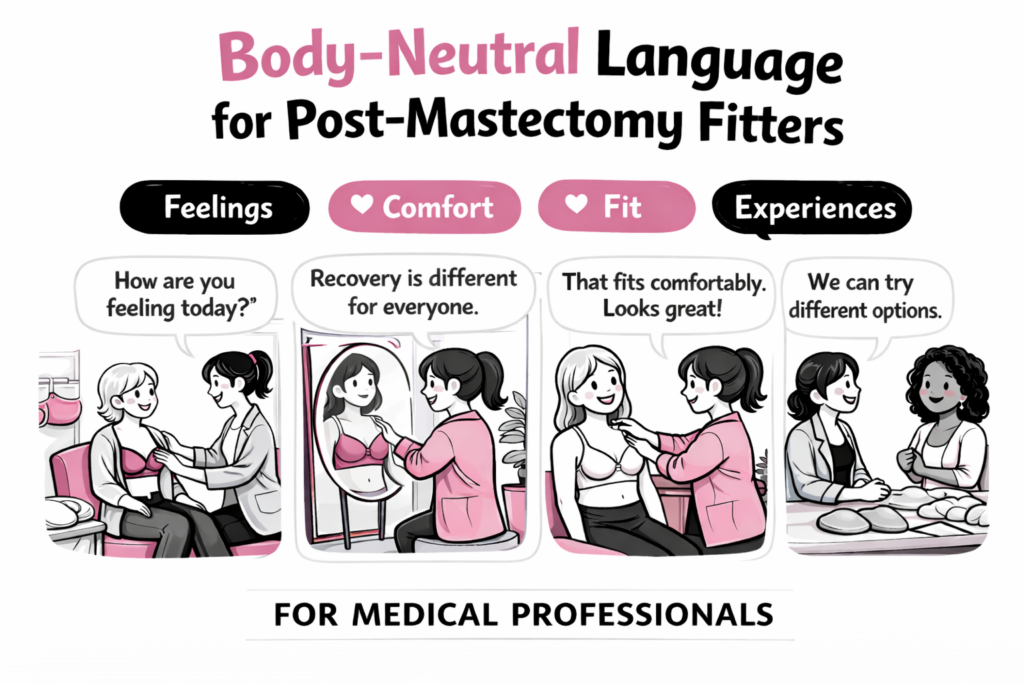
Breast cancer treatment can be physically and emotionally taxing. The fitting appointment may stir complex feelings related to body image, identity, and survivorship.
Trauma-informed care emphasizes safety, transparency, and choice. Always ask permission before physical contact and describe each step before proceeding. Allow the patient to set the pace of the appointment.
Be attentive to nonverbal cues. A pause, a shift in posture, or a change in tone may signal discomfort. Offering breaks or adjusting the approach demonstrates respect and responsiveness.
Listening without interruption is one of the most powerful tools a fitter can use. When patients feel heard, they are more likely to engage openly in the process.
Educating Patients for Long-Term Success
Education is an integral part of patient-centered care. Patients benefit from understanding how to care for their prosthesis and garments, when to schedule replacements, and what changes to monitor.
Provide clear instructions on cleaning silicone prostheses and rotating bras to extend their lifespan. Discuss expected wear timelines and insurance coverage guidelines. Written materials can reinforce verbal education and provide a reference at home.
Explain how weight and fit affect posture and comfort. Encouraging patients to notice signs of shoulder tension or skin irritation helps them advocate for adjustments if needed.
Education should feel collaborative rather than overwhelming. Pause frequently to invite questions and confirm understanding.
Collaborating Within the Healthcare Team
Post-mastectomy fitters are valuable members of the broader oncology care team. Maintaining communication with surgeons, oncology nurses, physical therapists, and lymphedema specialists enhances continuity of care.
If you observe concerns such as persistent swelling, skin breakdown, or pain, refer the patient promptly. Early intervention supports better outcomes and reinforces the fitter’s role as a healthcare professional.
Documentation should be thorough and accurate. Clear records of products dispensed, fit observations, and patient feedback contribute to professional accountability and coordinated care.
Encouraging Follow-Up and Ongoing Support
Recovery evolves. Weight fluctuations, additional surgeries, aging, or lifestyle changes can all influence prosthetic needs.
Encourage follow-up appointments and normalize reassessment. Framing follow-up as part of routine care rather than a problem-based visit reduces hesitation. Patients appreciate knowing that adjustments are expected and welcomed.
A simple check-in call or reminder can reinforce the sense of partnership. When patients view their fitter as a long-term resource, trust deepens and outcomes improve.
Elevating the Standard of Care
Delivering patient-centered post-mastectomy fittings requires a blend of clinical knowledge, technical precision, and genuine compassion. By focusing on fit accuracy, client comfort, and maintaining high professional standards, fitters contribute meaningfully to each patient’s recovery journey.
The fitting room is more than a place for product selection. It is a space where healing continues, questions are answered, and identity is reaffirmed. With thoughtful best practices and a commitment to individualized care, post-mastectomy fitters help patients move forward with strength and assurance.
In every appointment, there is an opportunity to make a lasting impact. When care is delivered with skill and heart, comfort and confidence naturally follow.