


Discover how color psychology shapes emotions and learn practical strategies for designing a post-mastectomy fitting room that supports dignity and healing.
Designing a post-mastectomy fitting room requires thoughtful attention to both physical comfort and emotional well-being. Women entering these spaces may be navigating a range of feelings—from relief and resilience to anxiety and vulnerability. While medical expertise and compassionate care are essential, the environment itself plays a powerful role in shaping the experience.
Table of Contents
One of the most effective design tools available is color psychology. The colors used in a room can subtly influence mood, perception, and emotional comfort. When used strategically, color can transform a fitting room from a simple clinical space into a welcoming environment that promotes dignity, serenity, and empowerment.
Understanding how colors affect emotions allows designers and post-mastectomy professionals to create spaces that support healing and confidence.
Why Color Matters in Healthcare-Inspired Spaces
Color has a measurable psychological impact. Humans naturally associate certain colors with specific emotional responses. These responses often stem from cultural experiences, biological responses, and learned associations with the natural world.
In healthcare environments, colors are frequently selected to reduce anxiety, improve mood, and create a sense of safety. Post-mastectomy fitting rooms benefit from these same principles. However, they must also feel personal and private, bridging the gap between medical care and retail comfort.
When selecting colors for a fitting room, the goal is to balance professionalism with warmth while avoiding colors that feel overly clinical or emotionally overwhelming.
Blue: Calm, Trust, and Professionalism
Design Tip: Use soft blue tones on accent walls, upholstered seating, or decorative textiles to create a calm and supportive atmosphere.
Blue is widely regarded as one of the most calming colors. It often evokes feelings of serenity, trust, and stability. For many people, blue is associated with open skies and calm water, both of which naturally create a sense of relaxation.
In a post-mastectomy fitting room, blue can help lower emotional tension and reinforce a feeling of trust between the client and the fitter. Lighter shades, such as soft sky blue or powder blue, can make a room feel open and airy, while deeper shades add professionalism and depth.
Green: Healing, Renewal, and Balance
Design Tip: Sage, eucalyptus, or olive tones work beautifully for wall colors, decorative elements, or furniture upholstery. Adding living plants further enhances the sense of renewal.
Green is strongly associated with nature, growth, and renewal. Because it sits in the middle of the visible color spectrum, the human eye perceives green as particularly restful and balanced.
For women recovering from surgery or navigating body changes, green can subtly symbolize healing and fresh beginnings. It reinforces the idea of recovery and emotional restoration.
Pink: Compassion, Comfort, and Emotional Warmth
Design Tip: Use subtle pink accents in pillows, artwork, or curtains to introduce warmth without overwhelming the design.
Soft pink shades often convey nurturing and compassion. While bright pink may feel overly playful or commercial, muted tones such as blush, rose, or dusty pink can create a warm and welcoming environment.
In a post-mastectomy setting, pink can provide emotional softness and reassurance without appearing overly themed.
Yellow: Optimism and Energy
Design Tip: Incorporate small touches of pale yellow through artwork, flowers, or decorative accessories to add cheerfulness without overstimulation.
Yellow is often associated with sunlight, happiness, and optimism. It can energize a space and add brightness, particularly in rooms that may lack natural light.
However, yellow is also a stimulating color and should be used thoughtfully. Too much yellow may create visual fatigue, anxiety, agitation, or distraction.
Purple: Dignity and Empowerment
Design Tip: Lavender accents in artwork, decorative pillows, or small furniture pieces can introduce elegance while maintaining a calm atmosphere.
Purple is frequently linked to creativity, reflection, and sophistication. Lighter shades such as lavender evoke calmness, while deeper shades communicate confidence and dignity.
Because empowerment and confidence are important goals for many post-mastectomy clients, purple can serve as a subtle symbol of strength.
The Role of Neutral Colors
Design Tip: Use warm neutral shades for large surfaces such as walls, cabinetry, flooring, and privacy screens.
Neutral tones provide the foundation for a balanced color palette. Neutrals are a key foundation of color psychology, contributing to a sense of professionalism while allowing accent colors to stand out.
Colors such as warm beige, cream, taupe, and soft gray help prevent a room from feeling visually overwhelming.
In a fitting room environment, neutrals are especially valuable because they keep the focus on the client and the fitting process rather than the décor.
Blue is widely regarded as one of the most calming colors.
Colors to Use Sparingly
While many colors promote comfort and healing, some should be used cautiously in sensitive healthcare environments.
Red
Red is associated with excitement, urgency, and high energy. In some settings, it can increase heart rate and emotional intensity. For a fitting room designed to encourage relaxation and reassurance, large areas of red may feel overwhelming.
Neon or Highly Saturated Colors
Bright neon colors or extremely saturated tones can overstimulate the senses. These colors may feel distracting and can disrupt the calming atmosphere that most post-mastectomy spaces aim to create.
Using softer, muted versions of colors helps maintain visual comfort.
Creating a Balanced Color Palette
Rather than relying on a single color, successful interior design typically combines multiple tones to achieve balance. Layering colors creates depth while maintaining a soothing emotional tone.
A well-designed fitting room palette might include:
- Primary calming color: soft blue or sage green
- Neutral base: warm beige, cream, or light gray
- Accent colors: blush pink, lavender, or pale yellow
Applying Color Beyond the Walls
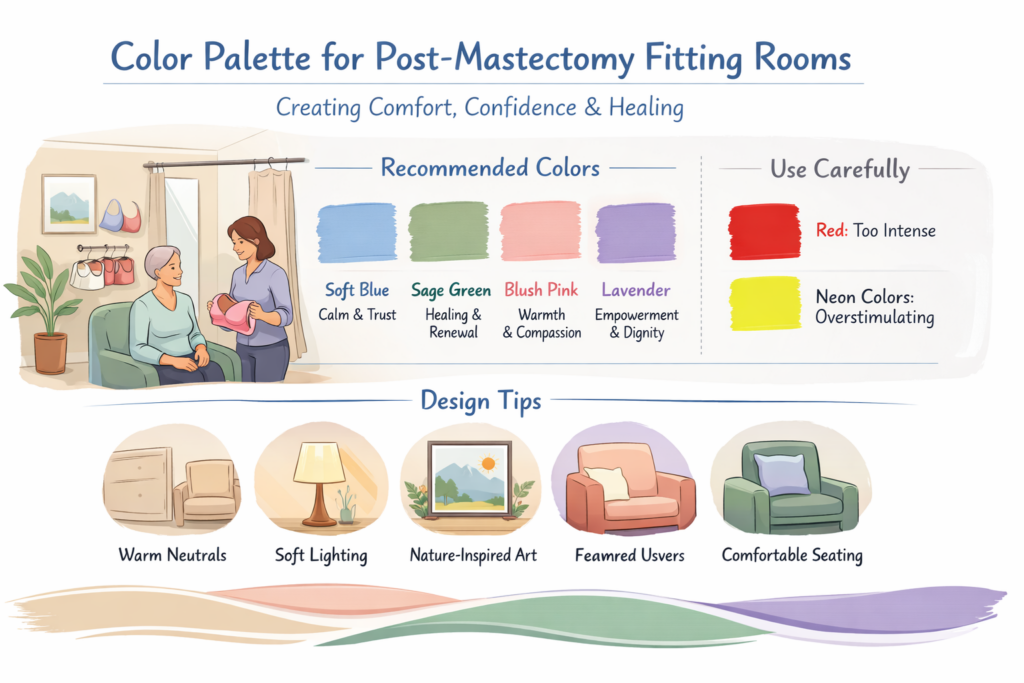
Color psychology should extend throughout the entire fitting room environment. Thoughtful design integrates color into multiple elements of the space.
Furniture and Seating
Comfortable seating in calming tones helps clients relax during consultations.
Privacy Curtains and Screens
Soft fabrics in warm neutrals or gentle pastels reinforce a sense of safety and privacy.
Artwork and Décor
Nature-inspired art featuring soft blues and greens can reinforce feelings of calm and healing.
Lighting
Warm lighting enhances color tones and prevents the room from feeling sterile or clinical.
Retail Displays
Neutral display areas ensure that bras, garments, and breast forms remain the visual focus.
Designing Spaces That Support Emotional Healing
The goal of a post-mastectomy fitting room is not simply to provide a place for product fittings. It is a space where women rebuild confidence, rediscover body comfort, and take meaningful steps toward recovery.
Thoughtful color choices help create an atmosphere where clients feel safe, respected, and supported. A calming palette encourages open conversation, reduces anxiety, and reinforces a sense of dignity.
By applying the principles of color psychology, designers and post-mastectomy professionals can transform fitting rooms into environments that nurture both emotional and physical healing.
Resources
Elliot, Andrew J., and Markus A. Maier. Color Psychology: Effects of Perceiving Color on Psychological Functioning.
Küller, Rikard, Ballal, S., Laike, T., Mikellides, B., and Tonello, G. The Impact of Light and Colour on Psychological Mood.
Stone, Nancy J. Environmental Psychology and Interior Design.
Birren, Faber. Color Psychology and Color Therapy.
Meerwein, Gerhard, Rodeck, Bettina, and Mahnke, Frank. Color – Communication in Architectural Space.
Mahmoud, Abeer H., and Tayebeh Abareshi. The Role of Color in Healthcare Interior Design.