


Discover what post-mastectomy boutique owners can learn from luxury hotels, spas, and concierge brands to elevate patient comfort, trust, and loyalty through exceptional customer experience.
In today’s experience-driven economy, patients are no longer evaluating care solely on products or clinical outcomes. They are evaluating how they felt during the experience. That subtle but powerful shift has transformed industries ranging from hospitality to healthcare—and post-mastectomy boutiques are uniquely positioned to lead the way.
Luxury hotels, wellness resorts, and concierge services have mastered the art of emotional comfort. They understand that true luxury is not always about extravagance. More often, it is about anticipation, personalization, discretion, ease, and emotional intelligence. For post-mastectomy boutique owners, those same principles can dramatically improve patient satisfaction, increase referrals, and build long-term loyalty.
The reality is that many women entering a post-mastectomy boutique are navigating one of the most emotionally vulnerable periods of their lives. They may be recovering from surgery, adapting to body changes, managing anxiety, or rebuilding confidence. In that environment, the boutique experience matters just as much as the products themselves.
The good news? The hospitality industry has already written the playbook.
Why Emotional Comfort Matters More Than Ever
Luxury hospitality brands excel because they design experiences intentionally. Every sensory detail is curated. Every interaction has purpose. Every touchpoint reinforces comfort and trust.
Post-mastectomy boutiques can adopt many of these same strategies without dramatically increasing overhead costs.
Patients today expect more than clinical efficiency. They are seeking spaces that feel welcoming, empowering, and emotionally safe. A boutique that understands this shift immediately differentiates itself from competitors that still operate with a strictly transactional mindset.
The Importance of the “Arrival Experience”
High-end hotels understand that first impressions establish emotional tone immediately. Guests are welcomed warmly, guided clearly, and reassured subtly that they are in capable hands.
Boutiques can apply this same philosophy from the moment a patient walks through the door.
Instead of a clinical or transactional atmosphere, consider creating an environment that feels calming, elegant, and private. Comfortable seating, soft lighting, curated music, and thoughtful décor can reduce stress before a fitting even begins.
Even small details—offering water, maintaining uncluttered spaces, or greeting patients by name—can shift the emotional dynamic significantly.
Designing a Boutique That Feels Safe and Calming
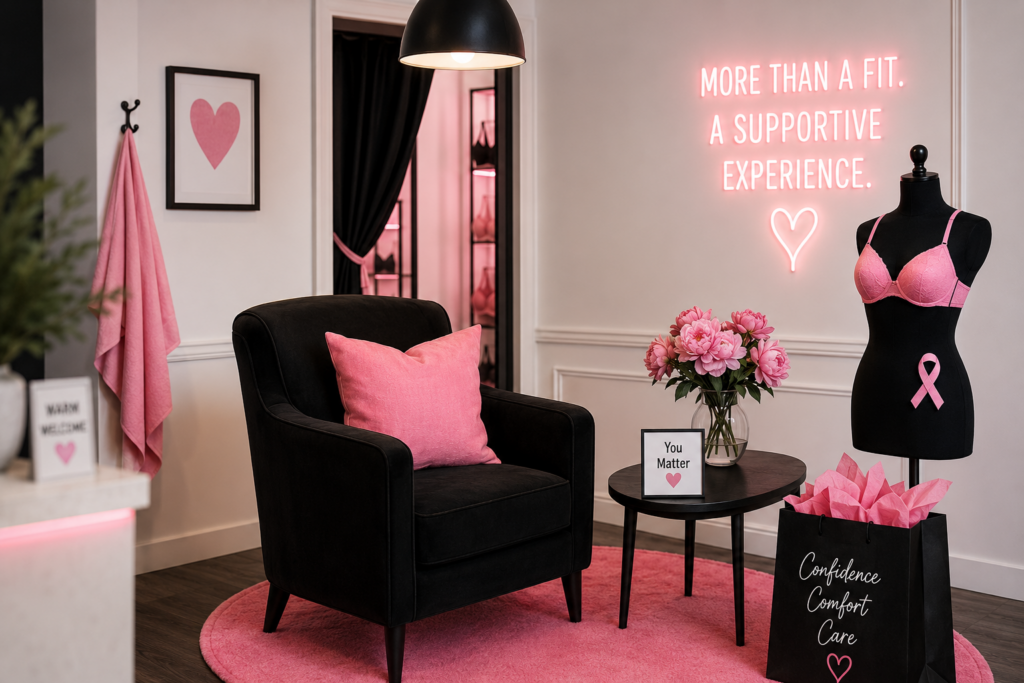
Luxury spas are particularly skilled at reducing sensory tension. They use environmental psychology intentionally. Warm textures, clean aesthetics, scent control, and quiet spaces all communicate safety and care without saying a word.
For post-mastectomy patients, sensory comfort can be deeply meaningful. Harsh fluorescent lighting, crowded fitting areas, or rushed interactions may unintentionally heighten vulnerability.
A boutique designed with emotional sensitivity in mind can transform the experience from intimidating to empowering.
Some boutique owners are now embracing a more wellness-inspired aesthetic rather than a traditional medical-retail look. Neutral palettes, natural textures, soft furnishings, and boutique-style displays can create a more modern and emotionally supportive environment.
Personalization Is the New Luxury
Luxury concierge services thrive because they make clients feel seen as individuals rather than processed as transactions. They remember preferences, anticipate needs, and create continuity between visits.
Post-mastectomy boutiques can elevate care tremendously by adopting a similar mindset.
This might include documenting personal fit preferences, noting fabric sensitivities, remembering lifestyle details, or following up after appointments. A patient who mentioned difficulty finding swimwear six months ago will feel genuinely valued if that concern is remembered during a future visit.
Personalization also extends to communication style. Some patients want detailed education and technical explanations. Others simply want reassurance and warmth. The best luxury service professionals learn how to “read the room” emotionally. Exceptional fitters do the same.
Privacy and Dignity Are Premium Experiences
In luxury environments, privacy is often treated as a premium service. For post-mastectomy boutiques, privacy is not simply a convenience—it is an emotional necessity.
Patients should never feel exposed, rushed, or observed during vulnerable moments. Thoughtful scheduling, private fitting areas, sound-conscious layouts, and compassionate language all contribute to preserving dignity.
Even operational systems can influence emotional comfort. Long wait times, confusing paperwork, or chaotic front desk interactions create friction that undermines trust.
Luxury brands obsess over eliminating friction points because seamless experiences feel emotionally safe.
Boutiques can benefit enormously from evaluating the patient journey from start to finish. Is scheduling easy? Are insurance discussions handled with clarity and empathy? Are follow-up calls supportive rather than transactional? Is the patient guided confidently through the process?
These details matter more than many businesses realize.
Anticipating Patient Needs Before They Ask
Another hallmark of luxury hospitality is anticipatory service. The highest-performing hotels and concierge teams do not simply react to requests—they anticipate needs before clients voice them.
For post-mastectomy boutiques, anticipatory care can create extraordinary patient experiences.
For example, a fitter may proactively discuss travel-friendly prosthetic options before vacation season or suggest softer garments for patients beginning radiation therapy. Educational packets, comfort tips, and recovery resources provided before questions arise demonstrate expertise and compassion simultaneously.
Patients remember those moments.
Emotional Intelligence Is a Competitive Advantage
Luxury hospitality brands invest heavily in emotional intelligence training. Technical competence alone is not enough. Communication, empathy, tone, pacing, and listening skills are treated as core competencies.
In post-mastectomy care, emotional intelligence is arguably one of the most valuable professional skills a fitter can possess.
Patients often remember how a fitter made them feel long after they forget specific product details. A compassionate pause, patient listening, or reassuring explanation can restore confidence during an emotionally difficult day.
This does not mean interactions should feel scripted or artificially cheerful. Modern luxury brands increasingly prioritize authenticity over formality. Patients respond best to professionals who are polished yet relatable, knowledgeable yet human.
Creating Signature Moments Patients Remember
Today’s consumers expect experiences that feel curated rather than generic. Boutique owners can borrow another hospitality strategy by creating “signature moments.”
Luxury hotels often design memorable touchpoints that guests associate specifically with the brand. In a post-mastectomy boutique, that could mean:
- A beautifully packaged first prosthesis fitting
- A handwritten encouragement card
- Survivor celebration milestones
- Thoughtfully assembled recovery kits
- Personalized follow-up communications
- Comfort-focused welcome experiences
These moments create emotional resonance. They transform services into experiences people remember and recommend.
Why Experiential Branding Matters
Social media has amplified the importance of experiential branding. Patients increasingly share healthcare experiences online, particularly those involving emotional transformation or compassionate care.
Boutiques that create visually appealing, emotionally supportive environments naturally strengthen word-of-mouth marketing.
That does not require becoming overly trendy or performative. Instead, it means understanding that aesthetics, atmosphere, and emotional tone now influence brand identity just as strongly as clinical expertise.
The Future of Post-Mastectomy Care
Perhaps the most important lesson luxury hospitality offers is this: people rarely remember every detail of a service interaction, but they always remember how the experience made them feel.
For post-mastectomy boutiques, that insight carries enormous significance.
Women entering these spaces are not simply purchasing garments or prosthetics. They are rebuilding confidence, reclaiming identity, and navigating physical and emotional transition.
Boutique owners who recognize the emotional dimension of care—and intentionally design experiences around comfort, dignity, and personalization—position themselves far beyond traditional retail models.
The future of post-mastectomy care may look less like medical retail and more like wellness hospitality.
And that is not a superficial shift. It is a profoundly human one.