


Discover how active listening transforms post-mastectomy fittings. Learn practical techniques to build trust, improve outcomes, and deliver truly patient-centered care.
Active Listening Skills for Post-Mastectomy Fitters
In the specialized field of post-mastectomy fitting, technical expertise alone is not enough. While proper measurement, product knowledge, and insurance navigation are critical, the foundation of exceptional care lies in communication—specifically, active listening. For post-mastectomy fitters, active listening is more than a soft skill; it is a clinical and relational tool that directly impacts patient comfort, trust, and long-term satisfaction.
Patients entering a fitting environment often bring a complex mix of physical needs and emotional experiences. Surgery, recovery, body image changes, and ongoing health concerns can shape how they communicate. Active listening enables fitters to move beyond surface-level interactions and truly understand each patient’s priorities, concerns, and expectations.
What Is Active Listening?
Active listening is the deliberate practice of fully concentrating on, understanding, and responding to a speaker. It requires more than hearing words—it involves interpreting tone, observing nonverbal cues, and reflecting back what has been communicated to ensure clarity.
In a post-mastectomy setting, active listening includes:
- Giving full attention without interruption
- Acknowledging both verbal and nonverbal communication
- Clarifying and summarizing key points
- Responding with empathy and professionalism
This approach shifts the interaction from transactional to patient-centered, reinforcing that the individual’s experience is valued and understood.
Why Active Listening Matters in Post-Mastectomy Care
Building Trust in a Vulnerable Setting
Post-mastectomy fittings often occur during a period of vulnerability. Patients may feel uncertain, self-conscious, or overwhelmed. When a fitter demonstrates genuine attentiveness, it creates psychological safety. Trust is established not through scripted reassurance, but through consistent, attentive engagement.
Patients who feel heard are more likely to:
- Share relevant medical and lifestyle information
- Express concerns about comfort or appearance
- Participate actively in decision-making
This transparency ultimately leads to better fitting outcomes.
Improving Clinical Accuracy
Active listening directly contributes to more precise fittings. Subtle details—such as discomfort with certain fabrics, sensitivity in specific areas, or lifestyle preferences—may not emerge unless the patient feels comfortable sharing.
For example, a patient might initially request a lightweight prosthesis but later reveal concerns about asymmetry during physical activity. Without active listening, this nuance could be missed, resulting in a suboptimal recommendation.
Supporting Emotional Well-Being
The fitting process is not purely functional; it intersects with identity and self-image. Active listening allows fitters to acknowledge emotional dimensions without overstepping professional boundaries.
Active Listening is a clinical and relational tool that directly impacts patient comfort, trust, and long-term satisfaction.
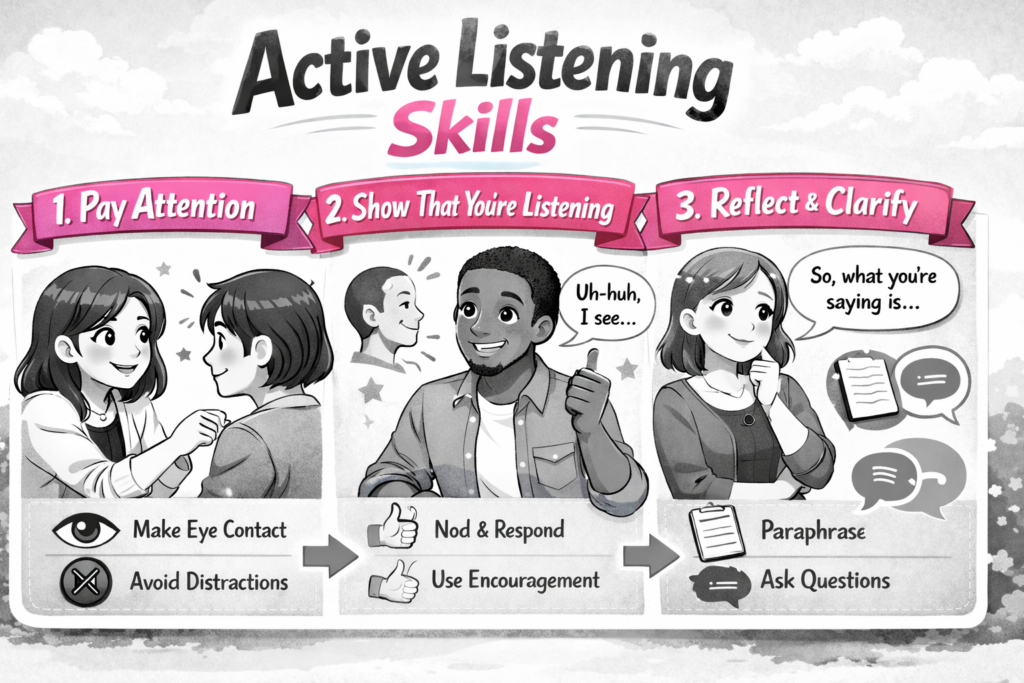
Core Techniques
1. Use Open-Ended Questions
Open-ended questions encourage patients to elaborate rather than provide yes/no answers. This creates space for more meaningful dialogue.
Examples include:
- “Can you tell me about what you’re most concerned about today?”
- “How have you felt using your current prosthesis or garment?”
- “What does comfort mean to you in this context?”
Simple affirmations such as “I hear that comfort is your top priority right now” or “It sounds like you’re looking for something that feels natural in your day-to-day routine” can validate the patient’s experience and reduce anxiety.
These questions signal that the fitter is interested in the patient’s perspective, not just completing a checklist.
2. Practice Reflective Listening
Reflective listening involves paraphrasing or summarizing what the patient has said to confirm understanding.
For instance:
- “It sounds like you’ve experienced discomfort with heavier prostheses, especially later in the day.”
- “You’re looking for something that feels secure but not restrictive—did I get that right?”
This technique reduces miscommunication and demonstrates attentiveness.
3. Observe Nonverbal Cues
Patients may communicate discomfort or hesitation through body language, facial expressions, or tone. A pause, a shift in posture, or a hesitant response can indicate uncertainty or concern.
Effective fitters remain attuned to these signals and respond appropriately:
- Slowing down the process
- Asking gentle follow-up questions
- Offering reassurance without pressure
4. Minimize Interruptions
Interrupting—even with good intentions—can disrupt the patient’s train of thought and signal impatience. Allow patients to complete their statements before responding.
If clarification is needed, wait for a natural pause and then engage with a thoughtful follow-up.
5. Validate Without Assuming
Validation acknowledges the patient’s experience without making assumptions or overgeneralizing.
Instead of saying, “I know exactly how you feel,” which may not be accurate, consider:
- “That sounds like it’s been a challenging experience.”
- “I can understand why that would be important to you.”
This approach maintains professionalism while demonstrating empathy.
Common Barriers to Active Listening
Even experienced professionals can encounter obstacles that limit effective listening. Recognizing these barriers is the first step toward overcoming them.
Time Constraints
Busy clinical environments can create pressure to move quickly. However, rushing through conversations often leads to missed information and repeat visits. Investing time up front can improve efficiency in the long run.
Preconceived Solutions
Fitters may be tempted to recommend products based on prior experience before fully understanding the patient’s needs. Active listening requires suspending assumptions and allowing the patient’s input to guide decision-making.
Emotional Discomfort
Discussions about surgery and body image can be emotionally charged. Some professionals may unintentionally avoid deeper conversations to maintain comfort. However, acknowledging these topics—within professional boundaries—enhances patient trust.
Integrating Active Listening Into Daily Practice
Active listening is a skill that can be developed and refined over time. Consider integrating the following strategies into your routine:
- Begin each appointment with a brief, open-ended check-in
- Take notes to capture key patient preferences and concerns
- Pause before responding to ensure thoughtful communication
- Reflect on interactions to identify areas for improvement
Consistency is critical. Patients quickly recognize when listening is genuine versus performative.
The Impact on Patient Outcomes and Professional Reputation
Active listening is not only beneficial for patients—it also strengthens the fitter’s professional practice. Positive patient experiences lead to:
- Increased referrals and repeat visits
- Higher patient satisfaction scores
- Stronger relationships with healthcare providers
In a field where trust and reputation are paramount, the ability to listen effectively becomes a defining professional competency.
Final Thought
Active listening is a cornerstone of high-quality post-mastectomy care. It bridges the gap between clinical expertise and compassionate service, ensuring that each patient feels understood, respected, and supported.
For post-mastectomy fitters, mastering this skill is not optional—it is essential. By prioritizing attentive, empathetic communication, fitters can elevate both the patient experience and the standard of care within the profession.
Resources
MedBridge. Active Listening in Healthcare: What Clinicians Can Learn from Improv.